Hajj Badal Service – Complete Guide and Booking Help
Hajj: A Complete Guide & Booking Options
Hajj Badal Service helps a pilgrim complete Hajj on behalf of someone who cannot travel. Our team follows every step with care and keeps you updated. This guide explains how the service works, what you need to provide, and how we complete each part of the worship. You can book safely, get clear support, and make sure the Hajj is done in the right way.
Hadith about Hajj / Proxy Hajj (Hajj Badal)
Hajj
Hajj wipes away sins
Narrated by al-Bukhari (1521) and Muslim (1350):
The Prophet ﷺ said:
“Whoever performs Hajj and does not engage in sexual relations, sin, or dispute during Hajj will return as free from sins as on the day his mother gave birth to him.”
Importance of Hajj for those able
Narrated by al-Bukhari (8) and Muslim (16):
The Prophet ﷺ said:
“Islam is built on five pillars: testimony of faith, establishing prayer, paying zakah, fasting Ramadan, and performing Hajj to the House (for whoever is able).”
Hajj Badal
A woman performing Hajj on behalf of her mother
Narrated by al-Bukhari (1513) and Muslim (1334):
A woman from the tribe of Khath’am came to the Prophet ﷺ and said:
“O Messenger of Allah, the command of Allah to perform Hajj has come when my father is an old man and cannot sit firmly on his mount. Should I perform Hajj on his behalf?”
The Prophet ﷺ replied:
“Yes.”
➝ This hadith is often cited as evidence that Hajj can be performed on behalf of someone unable due to illness or old age.
Pillars of Hajj
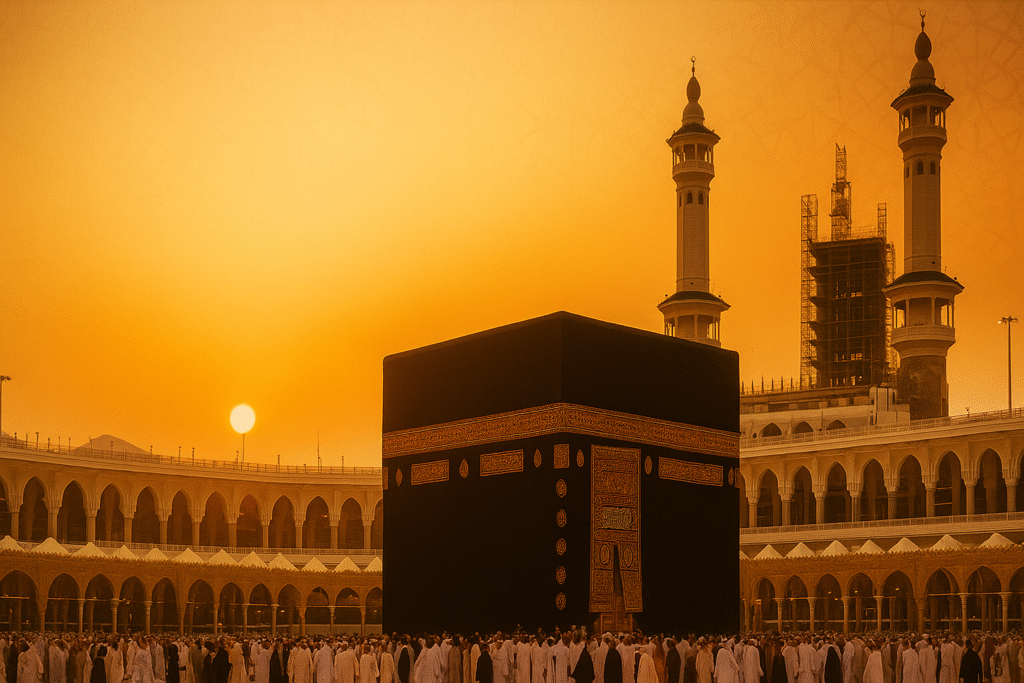
The Hajj is based on four pillars*:
*The pilgrimage is declared void if one of these acts has not been performed.
1st pillar
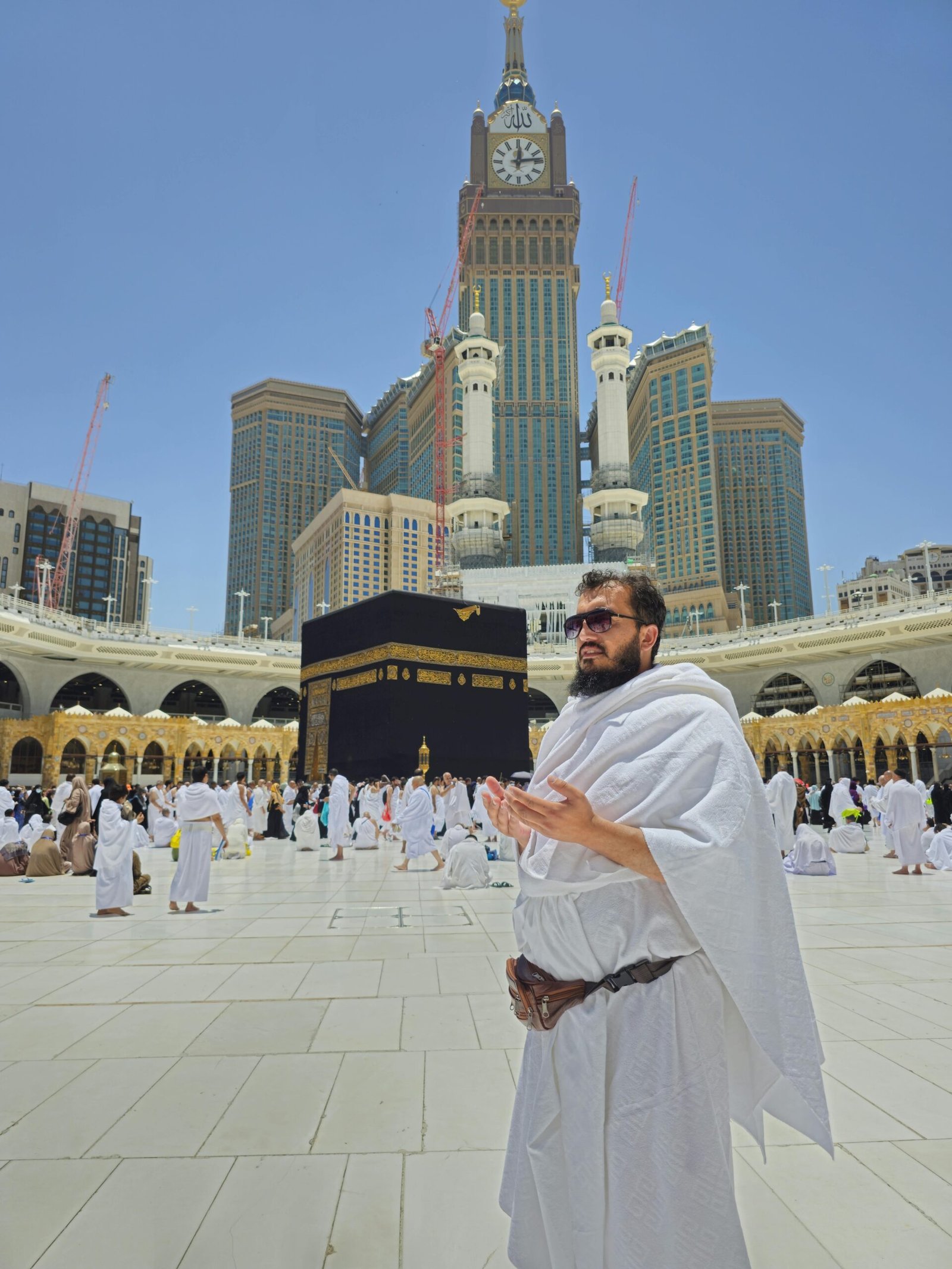
IHRAM
State of
sanctification
2nd pillar
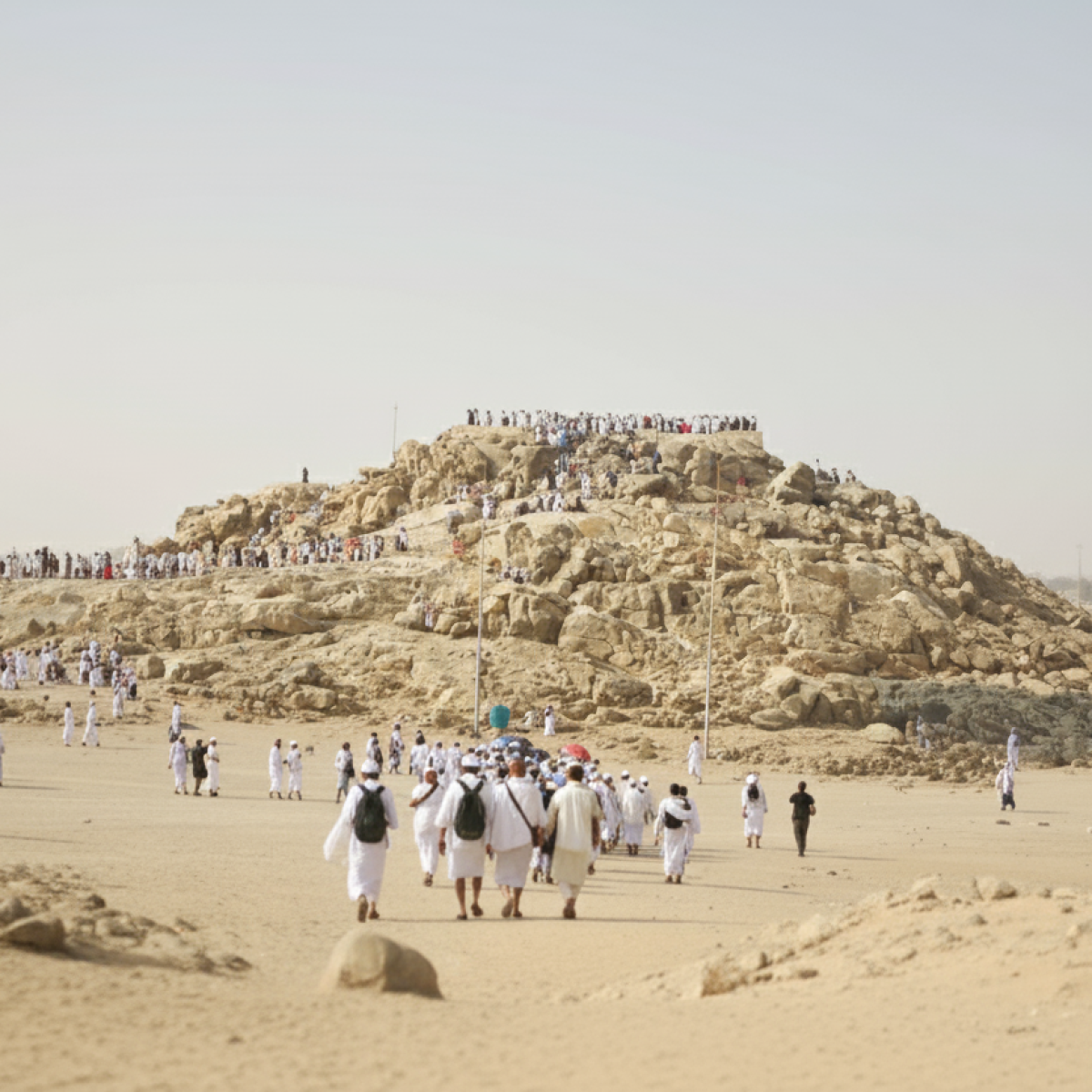
Arafa
Staying at Arafa
3rd pillar
TAWAF
Circumambulation
around the Kaaba
4th pillar
SA’I
Making Sa’i between As-Safa and Al-Marwa
Ihram
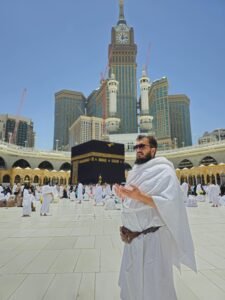
Before stepping into the sacred boundaries of Makkah, pilgrims must enter the state of Ihram. This is both a physical and spiritual preparation for Hajj. Men wear two unstitched white sheets — one wrapped around the waist and the other over the shoulders — while women remain in their modest clothing, covering their entire body except for the face and hands. At this stage, every pilgrim makes the intention to perform Hajj, entering a state of purity and devotion.
Tawaf al-Ifadah
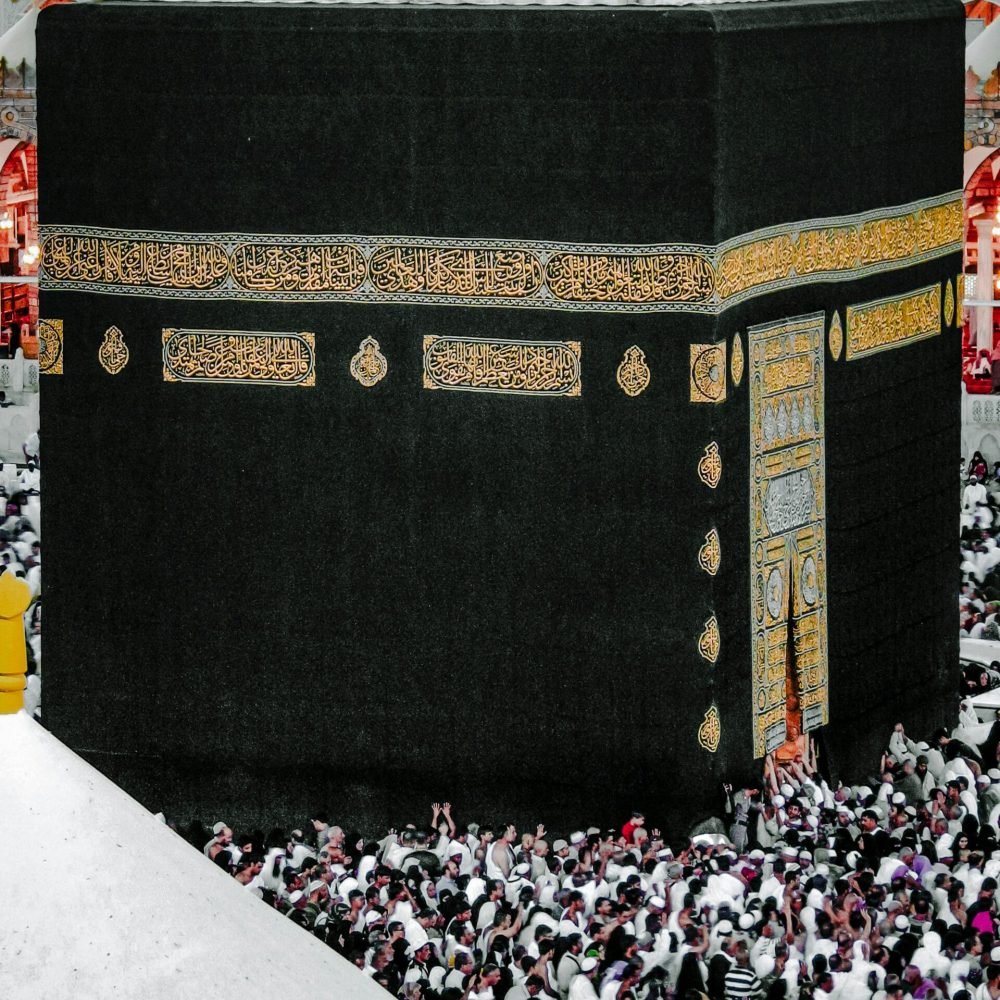
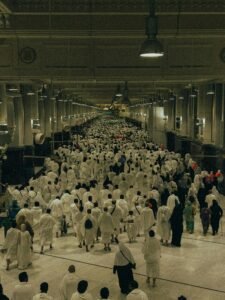
Tawaf al-Ifadah is performed after the standing at Arafat. Pilgrims circle the Kaaba seven times in a counterclockwise direction, beginning at the Black Stone or the marked line on the floor. This act symbolizes closeness to Allah and unity among Muslims, as millions of worshippers move in harmony around the sacred House.
Sa’i
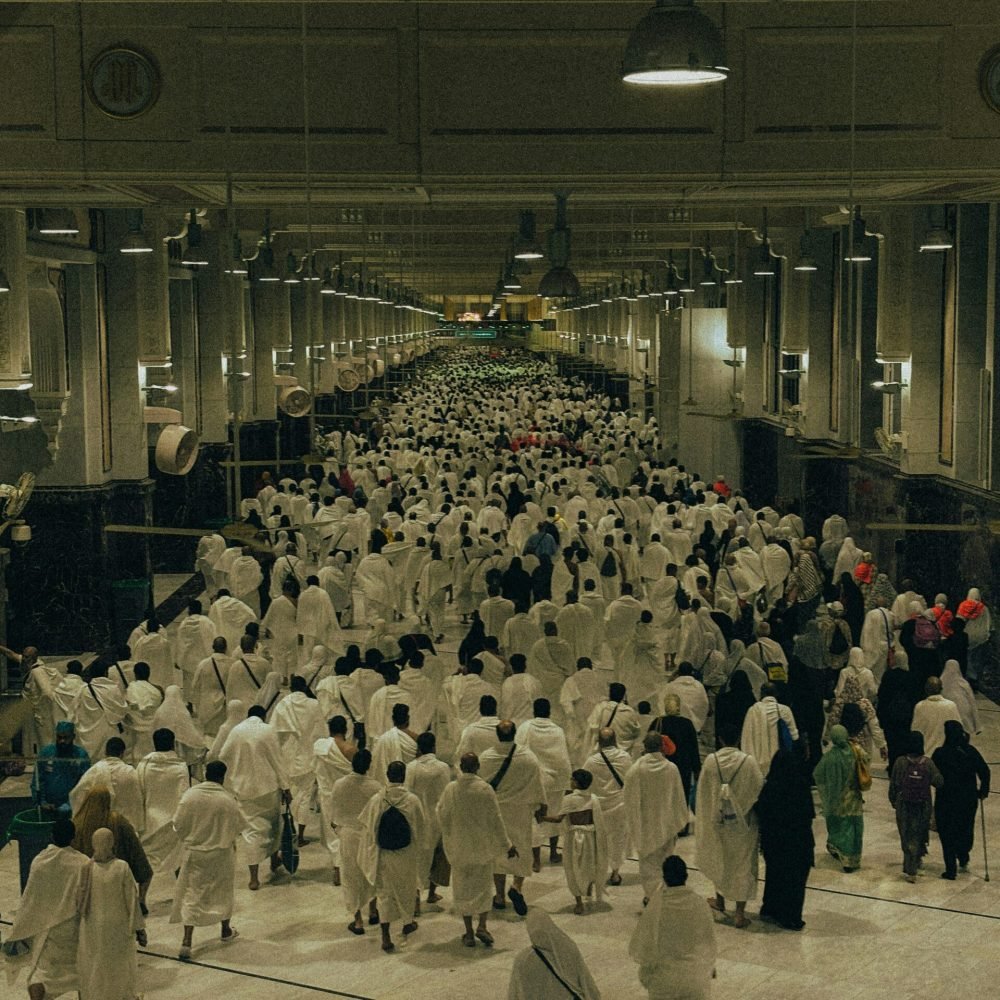
Sa’i is the ritual walk between the two hills of Safa and Marwa inside Masjid al-Haram. Pilgrims complete seven rounds, starting from Safa and ending at Marwa. The walk covers about 395 meters each way and commemorates the devotion and struggle of Hajar (AS), who ran between these hills in search of water for her son Ismail (AS).

Wuquf at Arafat
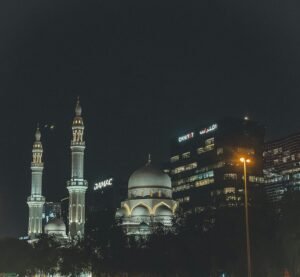
The gathering at Arafat, known as Wuquf, is considered the heart of Hajj. From the afternoon of the 9th of Dhul-Hijjah until sunset, pilgrims stand together on the plain of Arafat, near Mount of Mercy, raising their hands in supplication. This is the most sacred moment of Hajj, where believers seek Allah’s forgiveness, mercy, and blessings.
Mina
In Mina, pilgrims perform the symbolic stoning of the devil, known as Rami al-Jamarat. Small stones are thrown at three stone pillars, each representing the rejection of Shaytan’s temptation. Pilgrims spend the nights in Mina in prayer, remembrance, and devotion, strengthening their faith while reflecting on this spiritual journey.
Sacrifice (Qurbani)
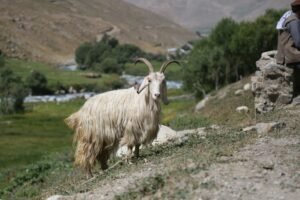
The sacrifice, or Qurbani, is performed in memory of Prophet Ibrahim’s (AS) willingness to sacrifice his son in obedience to Allah. Pilgrims offer an animal such as a sheep, goat, cow, or camel within the holy boundaries of Makkah. The meat is then shared with the poor, relatives, and fellow Muslims, spreading blessings and fulfilling this important Sunnah of Hajj.
Select Your packages
- Sale!
 proxyumrah
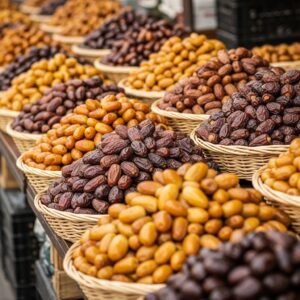
Ajwa Dates Donation (Per kg)
Rated 5.00 out of 53 reviews20 $Original price was: 20 $.15 $Current price is: 15 $. Add to cart